

Heavy-Duty Forklift Accessories That Boost Efficiency: Essential Solutions for Warehouse and Construction Operations
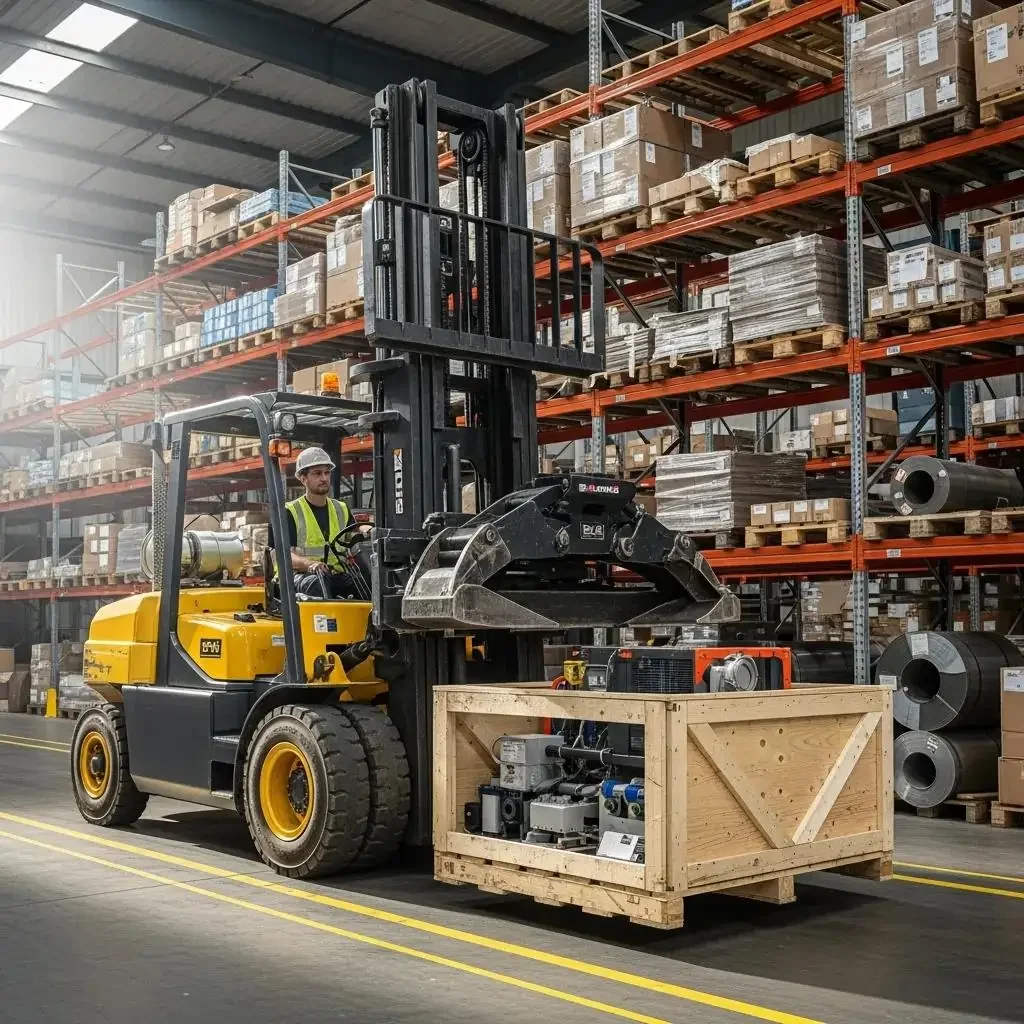
Heavy-duty forklift accessories are specialised attachments and parts that extend a forklift’s capabilities, enabling safer, faster and more reliable material handling across warehouses and construction sites. They work by adapting a standard forklift into task-specific equipment, adding reach, securing irregular loads, improving traction and simplifying dock transfers, to reduce handling time and lower incident risk. This article explains the most effective heavy-duty forklift attachments, tyres and support accessories, and shows how the right combinations cut downtime and operating costs while boosting throughput. Readers will learn which attachments suit particular loads, how tyre and tyne choices affect stability and maintenance, site-ready safety attachments for construction, and how container ramps and grapples streamline loading operations. Practical checklists, comparison tables and supplier integration notes are included to help procurement teams and site managers specify fit-for-purpose equipment with confidence. What Are the Key Heavy-Duty Forklift Attachments to Enhance Material Handling? Heavy-duty forklift attachments are purpose-built tools that change how a forklift interacts with loads, improving efficiency by reducing manual handling and enabling single-pass moves where multiple trips were previously required. Attachments like extensions, drum handlers, spreader beams and jibs modify reach, grip and load geometry so operators can transport awkward or heavy items safely and with fewer repositioning steps. Choosing the correct attachment depends on load type, forklift class and duty cycle, with compatibility checks and locking mechanisms critical to preserving safe working loads. The following comparison lists common attachments, their primary benefits and typical use-cases to make selection straightforward for procurement and operations planning. Top heavy-duty attachments and their one-line benefits: Forklift Extensions: Increase reach to handle long or bulky loads without compromising operator visibility. Forklift Drum Handlers: Secure drums to eliminate manual handling and prevent spills during transport. Spreader Beams and Jibs: Distribute load forces for lifting oversized items and enable slinging of pallet-less cargo. Rotators and Clamps: Allow controlled rotation and secure gripping for tipping, dumping or fragile materials. These attachments collectively reduce handling steps, which shortens cycle times and lowers labour exposure to manual lifting risks. Understanding attachment compatibility leads naturally to examining how specific extension types alter load centre and safe working load. How Do Forklift Extensions Improve Load Capacity and Reach? Forklift extensions are sleeves or bolted-on arms that lengthen the existing fork profile to accommodate longer or wider loads, and they work by shifting the load-bearing contact point further from the carriage. Slip-on extensions provide quick on/off versatility for intermittent long-load work, while bolt-on and custom extensions offer higher rigidity and more predictable load charts for continuous heavy-duty use. Operators must account for how extensions change the load centre and reduce safe working load; this is essential for maintaining stability and avoiding overloaded conditions. Regular inspection of locking pins, wear on contact faces and correct marking of adjusted load capacities ensures extensions deliver increased reach without compromising safety or forklift lifespan. The critical importance of understanding load center and its impact on forklift stability is further emphasised by studies on the stresses involved in lifting operations. Forklift Stability & Load Center for Safe Material Handling This study discusses how to design a system to establish the stability of a forklift fork working with different weights using designing and simulation software. The stresses which appear in the lifting installation of a fork-lift truck at loading-unloading operations are investigated for given input data like load carrying capacity of the fork, the effects of various loads on different positions of the fork regarding stresses and then compare calculated Stresses with allowable material stresses (yield stress/F.O.S). This paper focuses on the significance of Load Centre when subjected to loading at different positions. What Benefits Do Industrial Forklift Drum Handlers Provide? Forklift drum handlers clamp, cradle or engage drum heads so operators can lift, tilt and transport drums without manual handling, and they prevent costly spills and repetitive strain injuries. Mechanical and hydraulic grip designs secure 200L and other common drum sizes with rated capacities and often include rotation or semi-rotation features to aid decanting. Using a drum handler reduces transfer time, improves containment for hazardous liquids and minimises the need for additional personnel during drum moves. A product-features checklist, secure clamp, capacity rating, rotation control and easy-fit attachment, helps teams choose the correct drum handler for chemicals, oils or food-grade containers and supports safer, more efficient drum logistics. Attachment Typical Size / Capacity Primary Use-Case Fork extensions Varies by forklift and extension length Long timber, piping, and sheet materials Drum handler Designed for standard industrial drums 200L chemical and oil drums Spreader beam Depends on beam length and load rating Oversized machinery or bundled loads This table clarifies common attachment selection by matching capabilities to real-world tasks and highlights why secure fittings and rated capacities are essential before deployment. For on-site sourcing of these heavy-duty attachments, Mandarin Imports Exports supplies a range of extensions, tynes and drum handling attachments suitable for warehouse and construction applications, and can advise on compatibility and product specifications to match specific forklift classes. After choosing an attachment, the next critical decision is tyre and tyne selection, which directly influences the stability and uptime of your material handling fleet. How Do Heavy-Duty Forklift Tyres and Tynes Contribute to Operational Efficiency? Tyre and tyne selection determines a forklift’s traction, shock absorption and load-bearing behaviour, and choosing the right combination directly reduces downtime while improving operator confidence and load stability. Solid, pneumatic and semi-pneumatic tyres each have distinct performance profiles: solid tyres resist punctures and deliver longevity in debris-prone yards, pneumatic tyres offer better ride comfort on uneven terrain, and semi-pneumatic tyres strike a compromise between resilience and cushioning. Forklift tynes, manufactured from high-tensile steels, manage load transfer to pallets and reduce product damage when specified at correct lengths and capacities. Prioritising correct tyre compound and tyne specification lowers total cost of ownership by reducing emergency replacements, protecting drivetrains from shock loads and improving consistent cycle times. Key tyre and tyne benefits for efficiency: Reduced Downtime: Durable tyres lower puncture-related stoppages and maintenance windows. Improved Stability: Correct tyre/tyne