

Essential Forklift Attachments for Construction Success: Optimising Safety, Efficiency, and Versatility
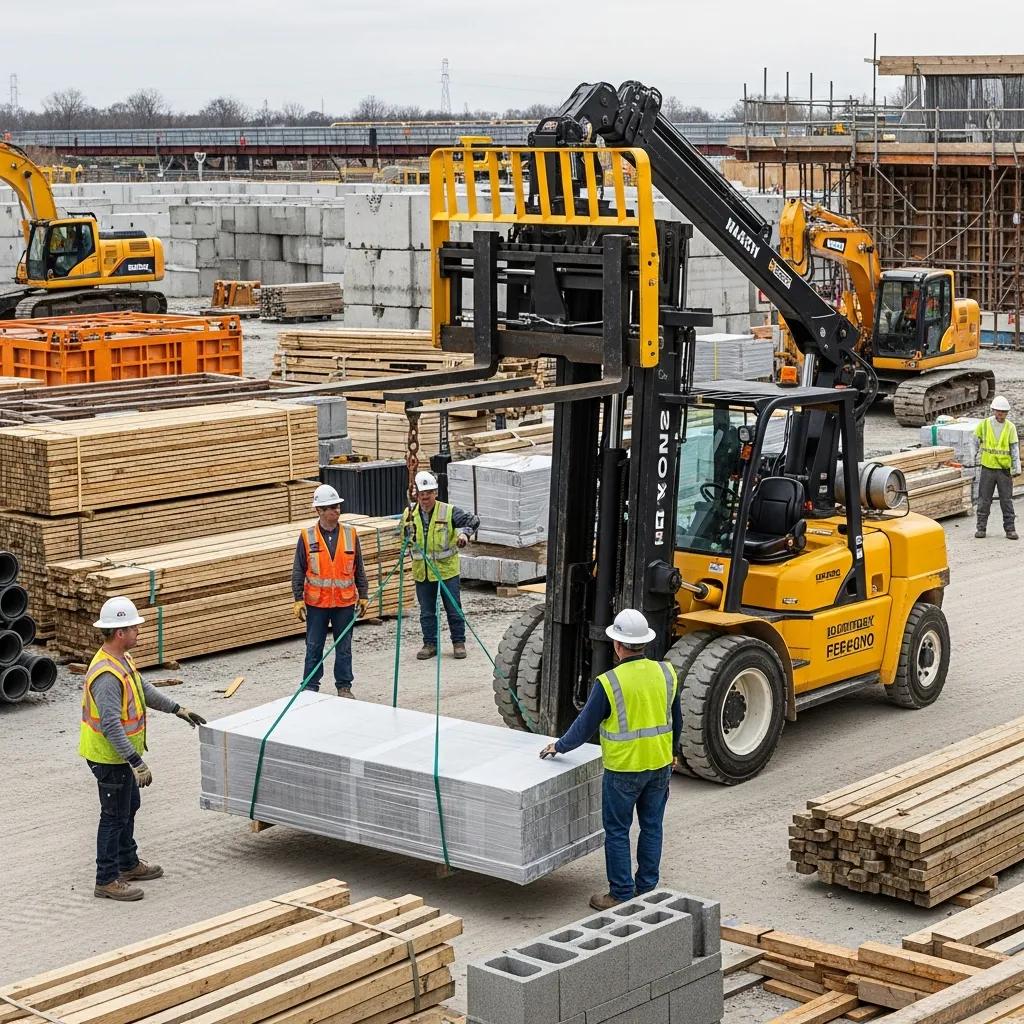
Forklift attachments are specialised devices mounted to a forklift to extend its capabilities on construction sites, enabling safer, faster and more versatile material handling. Understanding which attachments suit particular tasks helps project managers reduce manual handling, speed up workflows and meet site safety obligations. This guide explains the most effective forklift attachments for construction, how they improve safety, which options match common site tasks, and how to choose and maintain attachments for reliable long-term use. Readers will find practical checklists, direct task-to-attachment mappings, maintenance schedules and supplier guidance tailored to construction workflows. Throughout the article we reference core concepts such as load capacity, compatibility, site conditions and operator training, and we show where Sydney-based suppliers can assist with parts, hire and after-sales support. By the end you will have a clear framework to select, operate and maintain attachments that boost productivity while keeping crews safe. What Are the Most Effective Forklift Attachments for Construction Sites? Forklift attachments are specialised tools fitted to a forklift to perform construction-specific tasks by changing the machine’s interface with loads, increasing reach, rotation or containment. They work by redistributing loads, adding mechanical advantage or providing secure fixtures for irregular items, delivering improved productivity and reduced manual handling. Choosing the right set of attachments directly improves site throughput, decreases handling time and reduces the risk of damage to materials. Below is a concise curated list of essential attachments and one-line descriptions to help teams prioritise purchases or hires. The most essential forklift attachments for construction include: Fork extensions: Increase tine length to stabilise long timber, piping or profiles. Jib crane attachments: Add a lifting hook and swivel for lifting beams and placing items at height. Tipping skips and hoppers: Contain and dump loose material and site waste safely. Side shifters: Allow lateral tine movement for precise placement without repositioning the truck. Work platforms: Provide a secure elevated access platform for personnel with rated gates. Spreader bars: Distribute load when lifting long or flexible structural elements. Drum handlers: Securely lift and transport chemical or lubricant drums with minimal manual contact. These attachments address the majority of construction handling needs by combining reach, containment and precise placement. Next we examine heavy lifting and material handling attachments in detail to show how they handle specific load types and what considerations operators must observe. Which Forklift Attachments Enhance Heavy Lifting and Material Handling? Heavy lifting on construction sites often involves long or unbalanced loads where standard tines are insufficient; attachments such as jib cranes, spreader bars, fork extensions and drum handlers enable forklifts to handle these safely. Jib crane attachments convert a forklift into a short-reach crane with a rated hook and controlled swivel, allowing vertical lifting and fine positioning of beams or equipment. Spreader bars distribute load across multiple lift points to prevent bending or concentrated stresses when lifting long steel, timber or precast elements. Fork extensions stabilise long loads by increasing tine length and support area, reducing tip risk when transporting timber or conduit down site aisles. Drum handlers secure cylindrical loads with clamping or cradle designs, enabling safe transfer of liquids or lubricants without manual hoisting. Operators must factor in the forklift’s load chart with the attachment fitted and apply conservative safety margins; understanding the altered centre of gravity and dynamic load effects is essential to prevent overload and maintain stability. How Do Attachments Like Fork Extensions and Jib Cranes Improve Construction Operations? Fork extensions and jib cranes transform routine handling into safer, more efficient operations by extending reach and enabling positional control, which reduces double-handling and manual adjustments. Fork extensions allow crews to pick long lengths that would otherwise require two machines or manual support, simplifying logistics for timber and pipe delivery. Jib cranes enable vertical lifts and small positional adjustments, useful for placing beams, setting trusses or lifting light plant into confined areas where a crane is impractical. The trade-offs are weight and reduced residual capacity: extensions and jibs change the load centre and lower maximum safe loads, so operators must refer to modified load charts and ensure secure mounting. With correct selection and operator training, these attachments streamline workflows by reducing staging time and the need for temporary supports, improving both speed and site ergonomics. How Do Forklift Attachments Improve Safety on Construction Sites? Attachments improve safety by enabling secure handling of unusual loads, reducing manual lifting, and providing engineered safeguards for work at height and material containment. By matching attachment type to load geometry and task, teams reduce the likelihood of dropped loads, tipping incidents and manual handling injuries. Many attachments incorporate safety features, locking pins, rated gates, tie-off points and positive securing clamps, that enforce safer handling practices and make compliance with site rules and relevant Australian guidance more straightforward. The next paragraphs break down specific safety features found in common attachments and outline how correct usage translates into measurable reductions in accidents and site damage. The importance of comprehensive safety protocols and the versatility of forklift attachments are further highlighted in industry guidebooks. Forklift Attachments, Maintenance & Site Safety Forklift maintenance companies cannot afford to be without a copy of this guidebook. It is also beneficial in visitors to the site understanding the protocol. Forklifts have an array of attachments which transform the fork of a forklift into a versatile piece of equipment. A Guidebook of Industrial Traffic Management & Forklift Safety, TJ Larsson, 2003 Work platforms and side shifters include distinct safety features that support compliant elevated work and precise load placement. Work platforms are engineered with guardrails, self-closing gates and designated fall-arrest points to protect personnel when used for access or inspection tasks; they must be used only on forklifts rated for personnel lifts and with manufacturer-specified restraints. Side shifters reduce the need to reposition a forklift repeatedly, lowering exposure to traffic and collision risk by enabling small lateral adjustments from the cab. Both attachment types rely on secure mounting brackets and regular checks of tines/tynes, safety gates and locking mechanisms; inspection points include weld integrity, latch operation