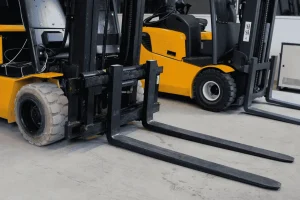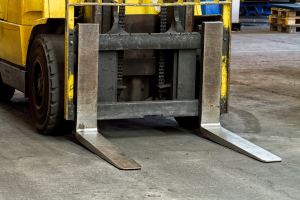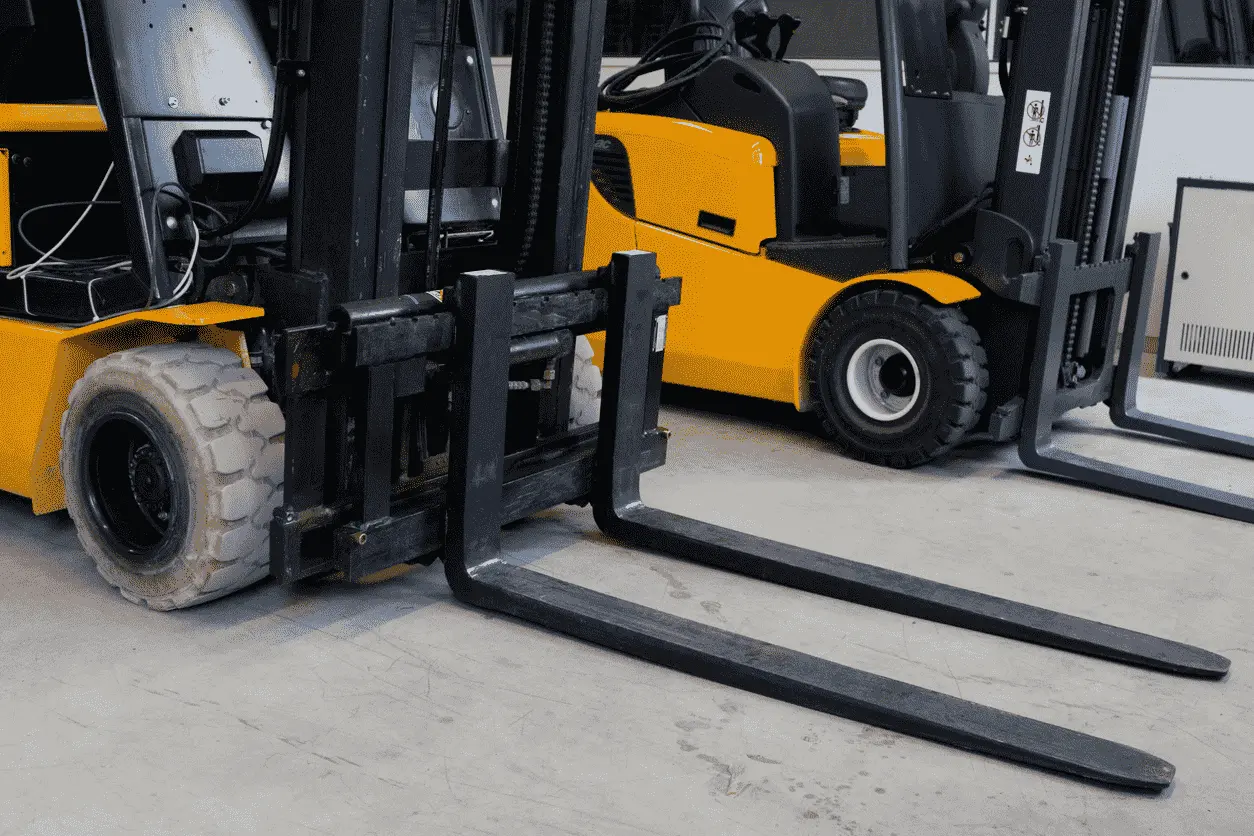
Forklift tyne dimensions rest on three measurements: thickness, width, and length, expressed as T x W x L. Mandarin Imports & Exports supplies tynes in multiple sizes to match specific load capacities and carriage classes. Correct sizing directly affects lifting safety and performance, making accurate measurement essential before replacing or upgrading forks for your fleet.
Key Takeaways
- Forklift fork dimensions include width, thickness, and length measurements that directly determine load capacity.
- Standard rectangular sockets measure 4 x 8 inches nominal in 6061-T6 aluminum construction for lifting applications.
- Fork classification systems organise different tyne types based on specific industrial lifting requirements and safety standards.
- Proper fork inspection procedures identify wear, damage, and dimensional changes affecting forklift operational safety and performance.
Why Do Tyne Size Specifications Matter Most?
Forks, tynes, or blades determine whether a forklift performs safely under load. Forklift tynes size specifications dictate how much weight a machine can elevator, carry, and set down without failure. Get the sizing wrong, and you risk dropped pallets, damaged inventory, and injured staff on your warehouse floor.
Tynes handle every elevator your operation depends on. They support, raise, and move loads across construction sites, industrial plants, and warehouse aisles. A mismatched fork puts stress in the wrong places, and that stress compounds every time your team runs another shift.
Why does fork size affect load capacity?
Dimensions directly control how much weight a forklift can hold. Thickness, width, and length work together to distribute load stress across the blade, so undersised tynes flex or crack under weight they were never rated to carry. You lose capacity, stability, and confidence in the equipment the moment sizing doesn’t match the job.
What happens if you choose the wrong tyne size?
Stability and warehouse floor safety suffer immediately. Selecting the correct dimensions protects your load, your equipment, and your personnel from avoidable accidents.
Before you replace or upgrade tynes, confirm these fit factors:
- Thickness rated for your typical load weight
- Width matched to the pallet or material footprint
- Length sized to fully support the load, not just the front edge
- Mounting compatible with your existing carriage class
Sizing isn’t a minor spec sheet detail. It’s the difference between a productive shift and a costly, preventable failure.
What Are The Three Core Tyne Dimensions?
Three measurements govern every tyne on your fleet: thickness, width, and length. Get any one of these wrong when ordering replacements. You risk a mismatch that compromises load capacity or won’t fit your carriage at all. Forklift tynes size specifications rest entirely on this trio, so understanding each measurement protects both your equipment and your operators.
Industry convention writes these dimensions in a fixed order: thickness by width by length (T x W x L). You’ll see this format on spec sheets, supplier catalogs, and OEM replacement guides. Knowing the order matters as much as knowing the numbers. Misreading a spec can lead you to order a fork that’s too thin for the rated load or too short for your pallet depth.
The steel blade itself determines how much weight your forklift can safely elevator. Thickness affects how much bending stress the fork resists under a heavy load. Width determines how well the fork distributes weight across a pallet or crate. Length dictates how deep the fork reaches into a load, which matters for pallet size and stacking configuration.
Why Do Tyne Dimensions Vary So Much Between Applications?
Size, thickness, and spacing shift according to what you’re actually lifting. A warehouse moving lightweight cartons doesn’t need the same fork profile as a construction site handling steel coils or concrete blocks. Matching tyne dimensions to your typical load protects against premature wear and reduces the risk of fork failure under stress.
Before ordering replacements, review these factors:
- Thickness — resists bending under heavy, concentrated loads
- Width — spreads weight evenly across the load surface
- Length — determines reach and compatibility with pallet depth
- Spacing — adjusts to match load footprint and stability needs
Procurement teams that verify all three core dimensions against actual load requirements avoid costly mismatches and downtime on the floor.
How Do You Measure Forklift Tynes Correctly?
Three measurements determine whether a tyne fits your forklift and load: length, width, and thickness. Guessing on any one of these risks a poor fit, uneven load distribution, or a fork that fails under weight it wasn’t built to carry. Forklift Tynes Size Specifications follow a straightforward process, so uncertainty about the right size shouldn’t slow down a replacement or upgrade decision.
Start with length. Measure from the heel, the vertical section that sits against the fork carriage, out to the tip of the blade. This number tells you how far the tyne reaches into a pallet or load.
Next, check width. Run your tape measure across the apartment surface of the tyne, from one edge to the other. Width affects how much surface area supports the load underneath.
Finally, measure thickness. This runs from the top of the blade down to the bottom. Thickness has a direct relationship to load capacity. A thinner blade flexes more under weight than a thicker one built for the same job.
What tool gives the most accurate reading?
A fork caliper delivers the most precise dimension readings available for length, width, and thickness. Standard tape measures work for general estimates. A caliper reduces the margin of error that leads to ordering the wrong size.
Why does getting these measurements right matter?
Mismatched tynes strain the carriage, throw off load balance, and shorten the service life of both the fork and the mast. Accurate measurement up front protects your equipment investment and keeps daily operations running without unplanned downtime.
| Measurement | How to Measure |
| Length | Heel to tip of the blade |
| Width | Across the apartment surface of the tyne |
| Thickness | Top to bottom of the blade |
Confirm each measurement before placing an order. A few extra minutes with a caliper now saves a costly reorder later.
What Are Common Standard Forklift Tyne Sizes?
Standard forklift tynes size specifications follow a thickness-by-width-by-length format. One size dominates the market: 1 1/2 inch by 4 inch by 42 inch. Buying the wrong dimensions costs you downtime, mismatched load capacity, and wasted procurement budget on parts that won’t fit your mast or carriage.
Thickness determines how much bending stress a tyne withstands under load. The provided sources do not specify 1 3/4 inch, 2 inch, and 2 1/2 inch as the three typical thickness options on the market. Thicker tynes generally handle heavier, denser loads without flexing, so matching thickness to your typical pallet weight matters more than defaulting to the biggest option available.
Width affects how the load sits and distributes across the blade surface. The provided sources do not list 5 inch. 6 inch as common widths, with wider tynes offering better support for loads without solid bottoms, like loose cartons or irregular crates.
Length is where most buyers get tripped up. A standard fork length measures 42 inches, though 48-inch tynes show up frequently across warehouse and construction fleets. Longer tynes support deeper pallets and double-stacked loads, but they also increase turning radius requirements inside tight aisles.
|
Dimension |
Common Sizes |
| Thickness | 1 3/4″, 2″, 2 1/2″ |
| Width | 5″, 6″ |
| Length |
42″, 48″ |
What size forklift tynes do most warehouses use?
Most warehouse fleets run the 1 1/2″ x 4″ x 42″ configuration. It fits a broad range of standard pallets and mast classes. If your operation handles oversized or unusually dense freight, however, stepping up in thickness or length prevents premature wear and keeps load ratings within safe limits.
Does tyne length affect load capacity?
Longer tynes shift the load’s center of gravity farther from the carriage, which can reduce your effective capacity rating. Matching length to your actual pallet depth, rather than defaulting to 48 inches, protects both capacity and mast stability.
How Does Carriage Class Affect Tyne Fit?
Carriage class determines whether a fork mounts securely to your forklift or fails under load. Mismatched classes create hazards on the warehouse floor, from slipped loads to costly downtime while you source replacement equipment. Getting this right at the procurement stage saves you from returns, delays, and safety incidents down the line.
Start by identifying your forklift’s carriage class, either Class 2, Class 3, or Class 4. This classification depends on two factors: your forklift’s lifting capacity and the size of its mast. A larger mast paired with higher capacity typically calls for a higher class number. Check both specifications before you order.
What Standard Do Carriage Classes Follow?
Compatibility verification connects directly to safety standards, specifically AS 2359. This standard governs carriage classes and mounting requirements across the industry. When you confirm your tyne selection against AS 2359, you reduce the risk of improper fitment and the equipment failures that follow.
Which Fork Type Fits Most Carriage Classes?
Standard ITA forks remain the most widely used option because they match common carriage classes across multiple industries. Their reliability and broad compatibility make them the default choice for general material handling. Specialised operations may still require custom fork types, but ITA forks cover the majority of standard warehouse and construction applications.
Before you place an order, confirm the following:
- Your forklift’s rated capacity and mast dimensions
- The carriage class (2, 3, or 4) that matches those specs
- Mounting compatibility per AS 2359 guidelines
- Whether standard ITA forks meet your load requirements, or a specialised fork type is necessary
Skipping this verification step puts your operators and your equipment at risk. Confirm carriage class first, every time, before finalising your tyne purchase.
Which Specialised Tynes Suit Unique Load Types?
Load type dictates tyne selection more than any other factor. Forklift tynes size specifications only tell half the story. The other half comes from matching tyne anatomy and load-center calculations to the material you’re actually moving. Get that match wrong, and you risk unstable loads, damaged goods, or a fork that simply won’t fit the task at hand.
Standard forks remain the workhorse choice for most warehouse operations. These forks handle general material handling tasks across a wide range of loads, which is why they show up constantly in warehouses, distribution centers, and manufacturing facilities. If your daily operation moves palletised freight without unusual shapes or weights, standard forks likely cover it.
Do you need specialised attachments for non-standard loads?
Yes, specialised attachments extend what a standard forklift can safely handle. These devices mount directly to the forklift and expand its capability, allowing for safer, faster, and more versatile handling of loads that standard tynes weren’t built for. Construction sites in particular benefit from this flexibility, since material types shift from one job to the next.
How do you know which tyne fits your load?
Start with the anatomy of the tyne itself, then calculate the load center, the point where weight concentrates on the fork. This calculation determines capacity and stability for that specific load type.
Consider these factors before selecting a specialised tyne:
- Load shape and dimensions — irregular or oversized items need forks beyond standard configuration
- Weight distribution — load-center calculations reveal whether a tyne can support the item safely
- Material handled — different tyne materials affect durability under repeated stress
- Task frequency — matching attachments to specific tasks reduces manual handling and supports your site’s safety obligations
Choosing correctly protects your team and your equipment investment.
How Do Capacity Tables Simplify Tyne Selection?
Capacity tables cut guesswork out of your buying decision. They pair a given tyne size with its typical load capacity. You match hardware to your actual freight instead of estimating and hoping. This matters because tynes are the load-bearing blades attached to your forklift’s carriage. The parts that elevator, carry, and stabilise palletised and irregular loads every shift.
Decision aids built around Forklift Tynes Size Specifications typically include:
- Measurement checklists for length, width, and thickness
- EAV (Effective Angle of Vector) tables that map specific sizes to their typical carrying capacity
- Worked examples showing how load-center distance changes the safe capacity for a given tyne
Rather than cross-referencing manuals or calling around for advice, you scan a table and find the size that fits your heaviest routine load. That’s the practical value: fast, defensible sourcing decisions backed by data instead of guesswork.
What happens if you pick the wrong tyne size?
Undersized tynes flex under load and wear faster than they should. Oversized tynes add unnecessary weight to your carriage and can crowd tight pallet openings. Either mismatch shortens service life and raises your replacement frequency, which is exactly the cost a capacity table helps you avoid.
When should you replace tynes instead of resizing them?
Worn tynes lose structural integrity long before they look obviously damaged, and running them past that point puts your load, and your operators, at risk. Replacing worn-out tynes, or upgrading to a heavier-capacity set when your freight profile changes, stays critical to safe, productive operations. A capacity table gives you the reference point to make that call with confidence rather than assumption.
What’s Your Next Step Before Replacing Tynes?
Confirm your cargo profile before you order a replacement set. Mismatched tynes cost you more than a slow afternoon. Bent forks damage pallets, delay shipments, and put your crew at risk. Start with the load, not the catalog page.
Forklift tynes size specifications matter because tynes support, elevator, and transport materials across every shift your fleet runs. Properly designed tynes handle different cargo types efficiently and safely, whether you’re moving palletised freight, drums, or irregular loads. Skipping this evaluation step means guessing at capacity, and guessing gets expensive fast.
How do you know if your current tynes still fit the job?
Look at what’s changed in your operation over the past year. If load weights, pallet types, or storage heights shifted, your existing tynes may no longer match the work.
Run through this checklist before placing an order:
- Cargo type: Confirm whether loads are palletised, drummed, or irregular in shape.
- Weight range: Identify your heaviest regular load, not just the average.
- Mounting compatibility: Verify the tynes match your carriage class.
- Wear condition: Check for visible bending, cracking, or heel wear.
Who should you contact for guidance?
A supplier familiar with your region’s fleet needs saves you time and rework. Mandarin Imports & Exports operates out of Fairfield East, NSW, serving Sydney-area warehouse and construction operations directly.
Reach out before you replace anything. A quick conversation with a knowledgeable supplier keeps your forklift moving materials without unplanned downtime.
FAQ
What do the three tyne measurements T x W x L represent?
Thickness, width, and length: thickness resists bending stress under load, width distributes weight across the pallet, and length determines how deep the fork reaches into the load.
What is the standard socket size for forklift forks?
Standard rectangular sockets measure 4 x 8 inches nominal, built from 6061-T6 aluminum construction for lifting applications.
What risks come from choosing the wrong tyne size?
Wrong sizing causes stress in the wrong places, leading to dropped pallets, damaged inventory, and injured staff, compromising stability and warehouse floor safety.
Conclusion
In closing, understanding forklift tyne size specifications remains essential for safe and efficient warehouse operations. Selecting the correct tyne dimensions ensures proper load handling, equipment longevity, and workplace safety. By matching tyne specifications to your operational requirements. Load characteristics, you establish a foundation for reliable performance across your material handling tasks. Mandarin Imports & Exports provides the expertise and quality products to support your equipment needs in Sydney.